
 Jon Wilner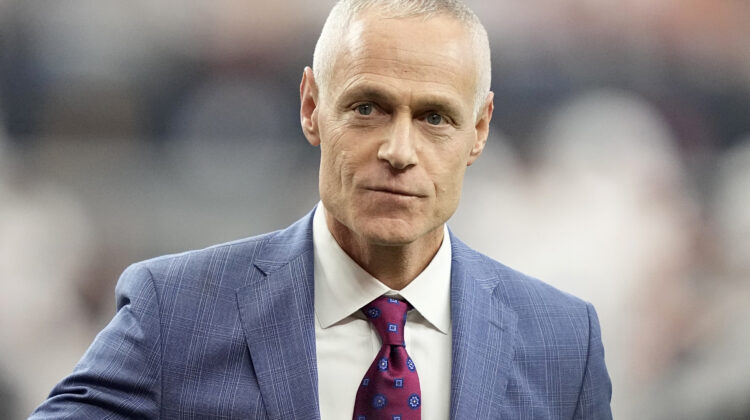
None of those challenges compares to the heaping pile of you-know-what that landed on Yormark’s plate Monday morning, when a Lubbock County, Texas, judge issued a temporary injunction allowing Texas Tech quarterback Brendan Sorsby to play this season.
Sorsby knowingly, willingly and repeatedly broke the unbreakable rule at the heart of college sports: He gambled on his own team as an Indiana redshirt in 2022, prompting the NCAA to rule him permanently ineligible.
More problematic for Yormark: Texas Tech fully supported Sorsby’s legal action and plans to send him onto the field Sept. 18 against Houston following a two-game suspension.
The situation is potentially more damaging than the transfer portal, NIL, revenue sharing, coaching buyouts and playoff expansion put together.
Oklahoma attorney general Gentner Drummond wrote on the social media platform X that he’s “outraged” by the ruling, which sets “a horrific precedent.”
The Big Ten plans to discuss whether to implement a league-wide ban on scheduling Texas Tech in all sports.
Georgia took that very step Monday, with athletic director Josh Brooks telling ESPN, “It’s important that we as institutions fight for the integrity of the game.”
It’s the DEFCON 1 scenario for the industry — gamble on your own team? no problem — and it’s unfolding on Yormark’s watch.
The court order from Judge Ken Curry, who is not a Texas Tech graduate, was issued Monday at approximately 7 a.m. (Pacific). Yormark remained silent for roughly eight hours, then issued the following statement:
“The ramifications of today’s ruling are significant and could have broad impacts across college athletics, creating great concern amongst our membership. I’ve been consulting with our key stakeholders and have scheduled a meeting with our Conference ADs and our Executive Board this week. We are also in touch with Charlie Baker and anticipate the NCAA to appeal the order in the next 24-48 hours. We will continue to monitor and evaluate the situation.”
The judge’s ruling and Texas Tech’s actions constitute only half the equation that makes this Yormark’s greatest challenge by a factor of 3 bajillion.
The other half: Other schools in the Big 12 are either extremely concerned or downright outraged.
Utah athletic director Mark Harlan wrote on X that he was “disheartened by the injunction issued today … which will allow (Sorsby) to compete this fall despite clear violations of NCAA policies and ethical guidelines.”
Colorado athletic director Fernando Lovo issued a statement calling the injunction “a clear affront to the competitive principles that have been the foundation of college sports.”
And Kansas State’s Gene Taylor told Yahoo that Big 12 schools should consider not playing the Red Raiders: “It’s something we have to look at from a college football perspective. This is greater than the Big 12.”
With other momentous issues that have crossed Yormark’s radar in the past four years, the conference was essentially unified on strategy and execution. But the Sorsby affair creates an internecine conflict, with 15 schools opposed to the action of the 16th.
What’s a commissioner to do?
Does Yormark have the legal and political levers available to take action?
Could the Big 12 suspend Sorsby despite the court order allowing him to play?
Could the conference void every game on Texas Tech’s schedule?
Two important points:
— The ruling is limited in scope and would not necessarily establish a precedent for other athletes.
Sorsby’s attorneys argued that his gambling addiction constituted a mental illness and should not be the source of a permanent ban. Incredibly, the judge agreed, ruling that he would suffer a “probable, imminent and irreparable injury” if barred from playing this season.
Isn’t that the point of a rule you cannot, under any circumstances, violate?
(In theory, the judge’s decision suggests athletes would be on stronger legal footing if they placed hundreds of bets, to indicate addiction, rather than a handful.)
“District courts, especially state district courts, don’t create binding precedent much of anywhere,” Boise State assistant professor Sam Ehrlich, who specializes in sports law, told the Hotline (via text message).
“There is absolutely no reason to think that other courts will blindly follow this ruling if they face something similar. They certainly can cite this case in support, but they don’t have to follow it at all.”
— The injunction does not include other schools in the Big 12, which seemingly indicates they would not violate the court order by freezing out the Red Raiders.
“They probably could be fine with boycotting if they wanted to,” Ehrlich added.
(The NCAA has appealed the ruling to the Seventh District, in Amarillo, where all four judges are Texas Tech graduates.)
Any refusal by Big 12 schools to compete against Texas Tech would be an unprecedented step in major college football and carry an assortment of consequences, starting with the dollars involved.
Fox and ESPN pay approximately $500 million annually for the right to broadcast football and men’s basketball games. If the Big 12 implemented a boycott, the networks assuredly would want their money back for the lost inventory.
How much?
Based on our back-of-the-envelope math, each Big 12 football game is worth an average of approximately $3.5 million. The Red Raiders have 11 matchups covered by the conference’s media contract, the exception being their non-conference date at Oregon State, which is owned by the Pac-12.
At minimum, it seems, the Big 12 would be on the hook for about $40 million. (ESPN and Fox could have objections beyond the cash component, as well.)
The other issue, of course, is the mechanism by which Yormark could seek to punish Texas Tech — with the full support of the university presidents across the other 15 campuses.
“They would likely need to cite some provision of their governance documents, like adversely affecting the integrity and reputation of the conference,” said a source well versed in sports law but not connected to the Big 12.
It’s a step few expected the Big 12 to even consider prior to Monday morning. Most industry executives and legal analysts believed Sorsby’s request for an injunction would be denied.
Instead, a giant, stinkin’ mess with mammoth implications landed on Yormark’s lap.
You can do pretty much anything in college sports these days. Players compete despite DUI arrests and domestic violence incidents, despite failing grades and drug charges.
None of those transgressions, ghastly as they may be, threatens the integrity of the game itself.
If players who gamble on their team are punished with a wrist slap and allowed to return, the issue will metastasize and the public won’t know if the competition is real or predetermined.
At that point, the wall separating college sports from pro wrestling will come tumbling down.
The next few days, and weeks, will be the supreme test of Yormark’s leadership.
*** Send suggestions, comments and tips (confidentiality guaranteed) to wilnerhotline@
*** Follow me on the social media platform X: @WilnerHotline
Related posts:
 Coaching carousel winners and losers: From Lane Kiffin, James Franklin and BYU to ESPN, the SEC and the new Pac-12
Oregon defensive back Daylen Austin (0)
Recruiting: The top defensive transfers for Pac-12 legacy schools
Arizona Wildcats guard Jaden Bradley (0) (AP Photo/Darryl Webb)
If not now for Arizona … when? The Wildcats are built for a deep run but must beat back their demons Huffman Recruiting notebook: Cal and UCLA compete for siblings, Colorado lands a QB and Oregon wins a family affair