
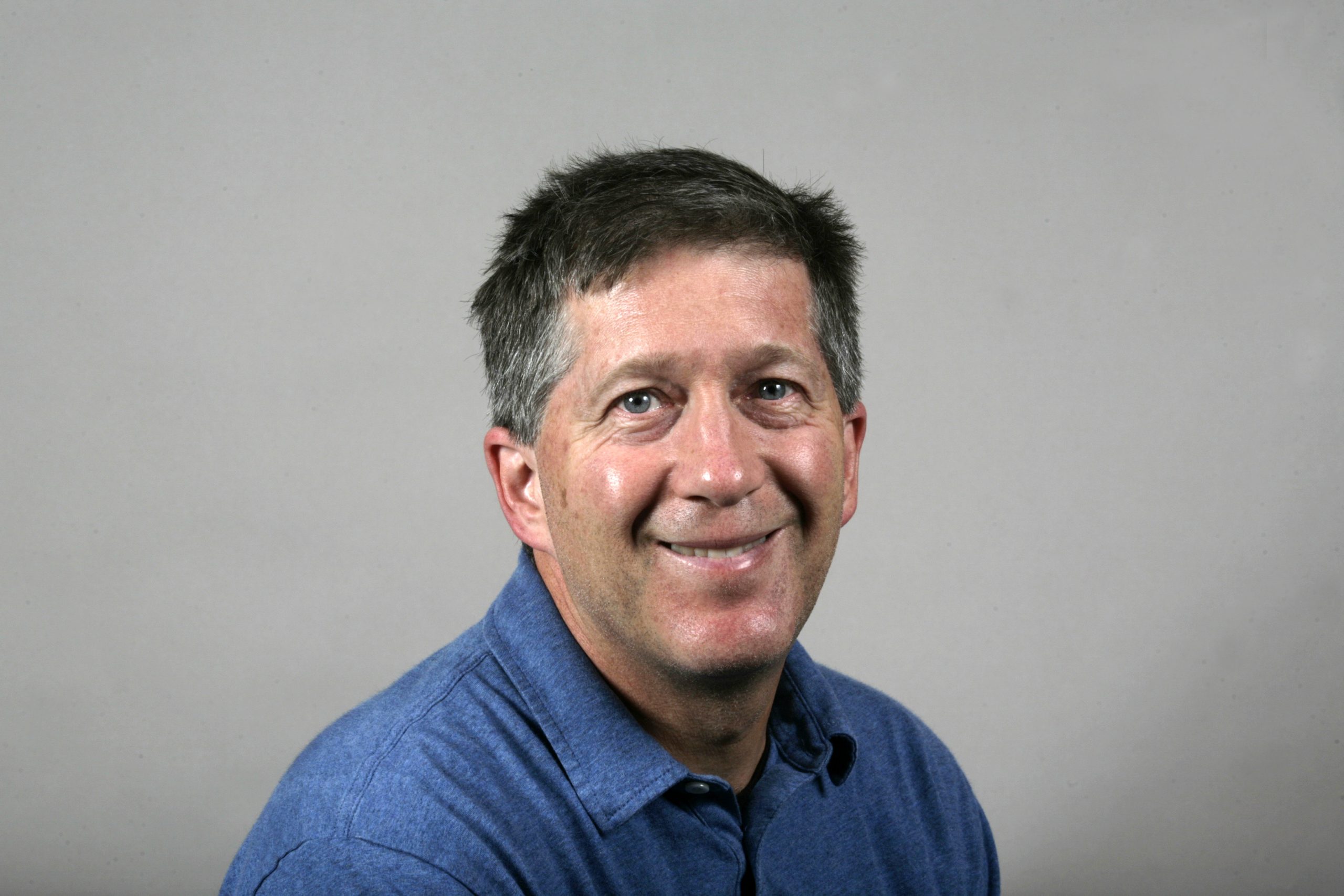
 Jon Wilner

Please send questions to wilnerhotline@
In case you missed it, last week’s mailbag examined the perception of an SEC bias in the College Football Playoff selection process.
What are the chances that we see an upstream domino effect on the coaching market similar to men’s basketball in 2024? The obvious scenario at play is Lincoln Riley and/or Kalen DeBoer stepping down to a Big 12 school and to USC, respectively. — Will
The Hotline considered devoting the entire mailbag to the coaching carousel, which is expected to gain speed Sunday and early next week.
So far, five schools in the power conferences have fired coaches: Baylor, Florida State, Maryland, NC State and TCU. Only NC State (Phillip Rivers) and Florida State (Glenn Schumann) have named replacements.
The force and duration of the carousel’s spin cycle depends, in part, on which schools make changes. Vacancies at the blue-blood level tend to create a ripple effect, as we saw in 2024 with Nick Saban’s retirement at Alabama leading to openings at Washington, Arizona and San Jose State
If Michigan fires Kyle Whittingham (more on that below), the dominoes would start to fall.
The same would be true if USC parts ways with Lincoln Riley, and perhaps Clemson, if Dabo Swinney is dismissed. (But not Colorado, which could cut ties with Deion Sanders.)
An upstream ripple is possible, too, as the question suggests.
In the spring of 2024, USC basketball coach Andy Enfield left for SMU, which led to Arkansas’ Eric Musselman jumping to USC and Kentucky’s John Calipari accepting the Arkansas job. (BYU’s Mark Pope replaced Calipari in Lexington.)
The football equivalents this winter, based on what we know in real time, would be Kalen DeBoer leaving Alabama for USC or Riley bailing for the Big 12 to stay one step ahead of the USC posse.
DeBoer worked with USC athletic director Jen Cohen at Washington, which is the reason for so much of the speculation. But we don’t see him bolting Tuscaloosa, not after signing an extension last winter when Michigan showed interest.
Of course, the situation could change if the Crimson Tide loses to Auburn and doesn’t qualify for the CFP — everything is fluid until it’s not — but that seems an unlikely outcome.
Riley is a different case altogether because he has yet to advance to the CFP over five seasons, a blemish that will get immeasurably darker if UCLA qualifies in Bob Chesney’s first season.
(Honestly, we cannot think of a greater humiliation for the Trojans.)
What if USC signals its intention to retain Riley for 2027 but he flees for the Big 12 anyhow? (Riley’s critics believe he left Oklahoma for USC to avoid coaching in the SEC, only to find himself in the Big Ten.)
We view TCU as both a better job than Baylor and a more likely landing spot for Riley, who grew up in West Texas and played for Texas Tech.
He would not take a pay cut, which means one of the schools would need to offer approximately $10 million annually. The Horned Frogs might have deeper pockets, but both probably could muster the funds.
In our view, Riley leaving USC, Big Ten blue blood, for a Big 12 program that isn’t his alma mater seems unlikely but not unthinkable, particularly if the Trojans lose to UCLA.
There is a better chance Riley either 1) returns to USC for next season or 2) is fired by the Trojans before taking another job.
Of course, he could get fired and then take the TCU or Baylor gigs.
The Trojans wouldn’t mind that: Mitigation clauses in his contract would lower the roughly $70 million buyout.
Does Michigan’s Kyle Whittingham survive after this season? Or does beating UCLA and perhaps Ohio State give him a reprieve? — MrEd31
The lack of a permanent athletic director in Ann Arbor might be more helpful to Whittingham’s cause than the victory over UCLA. (The Wolverines thought they had filled the position with Trev Alberts from Texas A&M but reversed course Monday and declined to appoint Alberts.)
And yes, a victory over the Buckeyes would certainly help his case.
But the Hotline expects Michigan to make a change regardless.
Whittingham, thought to be the ideal fit when he was hired last winter, has proven to be all wrong for the gig.
He coaches and comports himself like he never left Utah, particularly in the manner he constantly downplays the Ohio State rivalry. And nothing — nothing! — irks Wolverines fans like treating The Game as a game.
Whether or not Michigan hires a full-time athletic director by the end of the year, we expect Whittingham to be one-and-done.
Will Aaron Rodgers be the new Cal coach? (Yes, that’s sarcasm) — @skiswm
The newly-unemployed Rodgers won’t coach his alma mater in 2027, but we are not convinced Tosh Lupoi will return — not after a disastrous first season (3-8) that wasted money, talent and energy.
Lupoi has given no indication he’s capable of fielding a competitive team. But making a change would be costly and, to some degree, risky.
Would any proven head coach accept the job knowing general manager Ron Rivera is involved in every aspect of the program?
That he wears a headset on the sideline?
That he wants to be the head coach?
(Multiple sources have indicated Rivera discussed that option with chancellor Rich Lyons last year after dismissing Justin Wilcox. And it’s the perception across the industry, which is arguably more important than the reality.)
Our opinion: If the Bears lose to SMU on Saturday, and especially if they lose badly, the likelihood of a coaching change is 60 percent.
What in the world has happened to USC football since Pete Carroll bailed? The Trojans have history, tradition, facilities, L.A., good weather and, most important, money! — Steve L
Yes, they have all the ingredients needed to succeed consistently at the highest level, but the leadership was lacking for the initial years after Carroll’s departure.
Lane Kiffin wasn’t ready to be a head coach; nor was Steve Sarkisian. Clay Helton arguably was ready but not good enough at the craft to bring out the best of USC.
Combine those failed hires with the debilitating NCAA sanctions, and the result was 12 years in the wilderness caused by administrative dysfunction under athletic directors Mike Garrett and Pat Haden.
Riley’s issues are easy enough to identify: His culture doesn’t place nearly enough emphasis on defense or toughness.
We don’t see that changing as long as he’s in charge.
Texas State went 5-2 in Pac-12 play. Flip that 46-45 loss at Boise State, and we’re in the title game. Yet national TV still covers us like a rumor. Which newcomer surprised you most in Year 1, and who’s the league’s best kept secret for 2027? — @PacTheWack
The Bobcats lost by two points at San Diego State and one point at Boise State, and there’s a good case to make that they are the best team in the conference at the moment.
The eyeballs and attention will come if the winning continues next year — to the extent that any Pac-12 program not named Boise State generates eyeballs and attention.
Overall, it was a successful first season for the Bobcats, who are bowl-eligible and on the brink of eight wins.
In fact, they should be considered a worthy challenger to Boise State in the Pac-12 race every year, as long as the university remains committed to winning. (Considering the importance of football in the state of Texas, there is zero reason to believe that will change.)
Each team in the rebuilt Pac-12 could be viewed as a newcomer, and we did not expect Oregon State’s initial success under rookie coach JaMarcus Shephard.
But if our options are limited to the six schools that joined the Beavers and Washington State in reconstructing the conference, then Texas State probably stands as the biggest surprise.
The Hotline expected the Bobcats to be competitive but perhaps not to the level they have displayed in November.
If the conference held an all-in tournament on neutral fields starting this week, the Bobcats would be our pick to win.
Is ESPN doing cartwheels over the possibility of only one Big Ten team getting invited to the SEC Invitational (i.e., the College Football Playoff)? — @bogeycat85
The sentiment is entirely understandable: Many believe the CFP selection committee is biased in favor of the SEC and against the Big Ten, in part because the event’s exclusive rights holder, ESPN, is in business with the former but not the latter. (That is the Big Ten’s fault, by the way.)
But allow us to offer two contrarian points:
— The Big Ten has, in fact, underperformed this season.
The conference is 4-10 head-to-head against the ACC, Big 12, SEC and Notre Dame. Meanwhile, the SEC is 10-4 against the other power conferences. Heck, we’d argue the Big 12 is a stronger league, in large part because of the battered lineup of quarterbacks in the Big Ten.
— ESPN would much prefer to have the Big Ten’s biggest brands involved in the CFP.
To think the network is doing cartwheels because Ohio State, Michigan, Penn State and USC are on the outside looking in, well, that doesn’t make sense. From a business standpoint, ESPN is better off with those teams involved, rather than Wake Forest, Texas Tech, BYU and Utah. (No offense to that quartet, but ratings are ratings.)
So allow us to disagree with the sentiment expressed in the question, even though we understand why you feel that way.
Is Michigan currently the worst run athletic department in the Power Four leagues? — @utahfootballgm
There has been plenty of chatter this week, on both social media and legacy media outlets, about this issue.
The consensus seems to be that Michigan and LSU are locked in a steel-cage match to determine the most dysfunctional athletic department.
In our view, Michigan stands in a class of its own.
Many disagree with LSU’s actions and positions on a slew of issues, including whether to roster former NFL and NBA players.
But the Tigers are intentionally playing the role of rabble-rouser — from the governor to the attorney general to the university president to the coaches, Lane Kiffin (football) and Will Wade (basketball), everything is done purposefully.
Meanwhile, many of Michigan’s pratfalls are unintentional.
The Wolverines did not want to fire their head coach (Sherrone Moore) for an inappropriate relationship with a staffer.
They didn’t want Kyle Whittingham’s first year to be a failure.
They didn’t intend to fire their new athletic director (Trev Alberts) before he served one day on the job.
Also, Michigan’s issues date back three years, to the fall of 2023, when then-coach Jim Harbaugh was suspended twice and the sign-stealing controversy unfolded.
In both duration and pure incompetency, the Wolverines are No. 1.
Now that Stanford is bowl-bound and quarterback Davis Warren is returning for 2027, what can fans expect next year? The ACC continues to field playoff contenders. But could a reloaded Stanford go 8-4 or 9-3? — @joshfried
It depends, in part, on the success of the “reload.” The Cardinal (6-5) have emerged as one of the season’s biggest surprises, especially after four blowout losses in the first two months.
Tavita Pritchard would be the favorite for ACC Coach of the Year if not for Jake Dickert guiding Wake Forest to a (likely) playoff berth.
That hardly guarantees eight or nine wins in 2027. But fans absolutely should expect another competitive season in which Stanford becomes bowl-eligible.
Generally, the Cardinal can be as good, bad or irrelevant as it wants to be. It has plenty of money for NIL and revenue sharing. The issue, now and always, is willpower.
Does the university care enough about winning to effectively deploy its vast resources?
The lack of interest in football at the top of the university from 2018-2023 is why Stanford landed in the ACC when the Pac-12 collapsed and not the Big Ten.
It appears the priorities are changing. We’ll know more after the transfer portal opens.
I take it from Pac-12 commissioner Teresa Gould’s comments that the conference is okay with the flex schedule continuing for a few years? What is your view? I think we should get to 10 teams and play nine conference games. — Howard
Gould did not signal any urgency to add another school (or two) when she chatted with the Hotline a few weeks ago about Pac-12 expansion.
Generally, we agree with her conclusion that the problematic football schedule — the seven-game, round-robin format leaves five non-conference openings — should not be solved by adding a school that devalues the collective.
That said, we need to see the practical outcomes of the Flex Saturday approach.
The conference took a risk by sending Boise State to Colorado State (3-8) this weekend. Yes, it was deemed the matchup most likely to produce a victory for the Broncos (9-2), which was the smart strategy before they lost to San Diego State.
With their position as the top-ranked Group of Six team far more tenuous, the move potentially could backfire.
What if beating a bad team undermines the Broncos’ schedule strength to the point that they are overtaken in the CFP rankings by the top team in the American?
To a degree, the Pac-12 is flying blind: The selection committee doesn’t disclose the size of the gap between the Broncos and the other Group of Six teams.
But that’s part of the risk baked into the Flex Saturday approach.
If playing Colorado State works against the Broncos, the conference might rethink its strategy for next season. Could that mean adding a ninth football school? That seems unlikely, but you never know.
*** Send suggestions, comments and tips (confidentiality guaranteed) to wilnerhotline@
*** Follow me on the social media platform X: @WilnerHotline
ReplyReply allForward
Share in chat
Related posts:
(AP Photo/Ralph Freso, File)
Wilner Hotline – Blast it all you want, but the Alliance of the Pac-12, ACC and Big Ten has already accomplished its mission
(AP Photo/Mark J. Terrill)
Wilner Mailbag: Hot Seats for ‘Pac-10’ schools, options for WSU and OSU, the Bay Area’s carbon issue and loads more Big 12 football power rankings for Week 6: No changes at the top with Utah and BYU as Arizona State searches for answers
CFP expansion: Details of the 24-team format, the revised competition calendar and the question left unanswered