
 Sports360AZ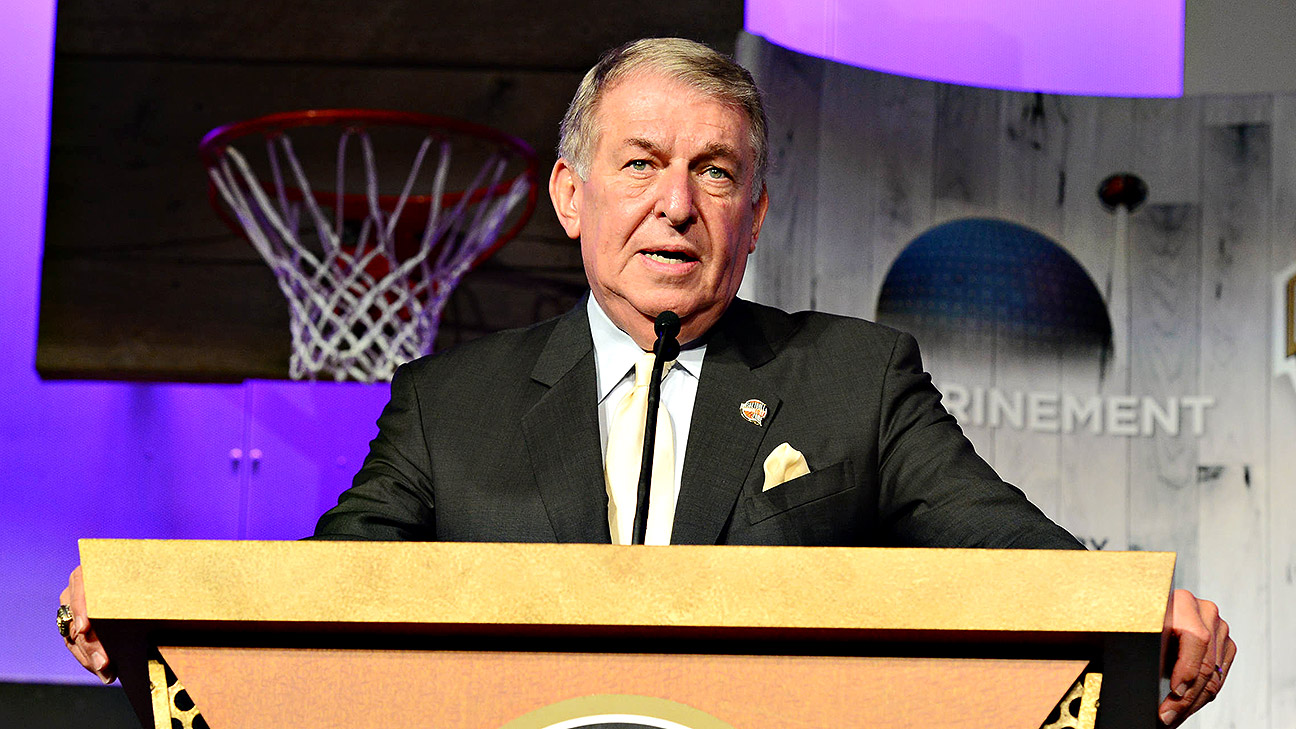
By Jeff Metcalfe
Jerry Colangelo remembers his first significant conversation about women’s basketball with NBA commissioner David Stern, in New York in early 1996.
“He (Stern) said, ‘Jerry, what do you think about having a league for the women?’ This was like a thought. The more we talked, the more it seemed that it was time to do it. Women’s basketball was beginning to make its mark. You could feel it was coming.”
With or without NBA backing.
The American Basketball League, an eight-team league announced in September 1995, was preparing for its first season starting in fall 1996 with presumed momentum from the Atlanta Olympics. With Tara VanDerveer as coach on leave from Stanford, the U.S. women’s national team barnstormed seven countries over 10 months in 1995-96, going 52-0 leading into Atlanta then 8-0 to win a gold medal.
Stern and NBA owners like the Phoenix Suns’ Colangelo knew that to sign a share of the U.S. Olympians and not allow the ABL too great of a head start on the first sustainable American women’s pro league, immediate action was necessary.
In February 1996, during NBA All-Star Game weekend in San Antonio, Stern made it clear that women’s basketball was an NBA agenda item.
“We have no fully developed plans,” Stern said, but a self-imposed deadline of May 1 to get to that point. Following through, the NBA Board of Governors on April 24 unanimously approved launch of the WNBA starting in summer 1997.
“We are giving life to a concept that has been much discussed, much attempted, but that we feel is now ready to bloom,” Stern said.

Val Ackerman then was NBA vice president of business affairs and soon would be named WNBA president, a position she held for a decade through early 2005.
“Jerry was one of the early owners to sign on to the concept of the league and to take a team,” Ackerman said. “That support was critical in getting the league off the ground.”
There was competition to be among the WNBA inaugural eight franchises, all in NBA cities, but little doubt that Phoenix would be one.
“Sometimes it’s instinctive, you just feel like the timing’s right to do something,” Colangelo said. “When you have the strength of a league like the NBA, that goes a long way toward giving you a platform to be successful.”
The Phoenix Suns began playing at what is now Mortgage Matchup Center in 1992 and from a business perspective the WNBA was another way to keep the arena operating. Depending, of course, on the ability to draw a crowd for women’s basketball.
Cheryl Miller hiring critical at outset

There was no Halloween trick for Phoenix when the WNBA announced its start-up teams on Oct. 30, 1996.
Three of the first eight – New York, Los Angeles and Phoenix – still are playing in their original cities and completing their 30th season.
Of the other originals, Utah relocated to San Antonio then Las Vegas. Sacramento, Houston, Charlotte and Cleveland folded in the 2000s although Connecticut is moving to Houston in 2027 and Cleveland will have an expansion team starting in 2028.
By Thanksgiving 1996, Cheryl Miller was already among those known to be a coaching candidate for the yet-to-be named Phoenix franchise. Her hiring as coach/general manager became official in late January 1997, ahead of the Mercury name announcement in February.
“What made her such a great choice was she was not only a women’s basketball legend, but she was a big personality,” Ackerman said. “She had this gift in terms of her ability to energize the fans. I remember being at games where they’re winning and she’s jumping on the scorer’s table after the game. I’d never seen it before.”
Danny Ainge then was Suns head coach. Colangelo talked both into leaving Turner Sports as NBA analysts for the Phoenix jobs.
“She was a perfect choice with her authenticity,” Colangelo said. “She had a lot of enthusiasm and stuff going for her. She did a fabulous job and we had some big years under her early on.”
Miller’s name recognition and visibility was vital when a majority of first-year WNBA players were unfamiliar because of being forced to play overseas after college. The Mercury’s first players were Australian guard Michele Timms and Jennifer Gillom, who won gold medals for the U.S. in 1986 and 1988 but otherwise was not seen domestically for a decade after her college career ended.
The ABL folded in December 1998 with best of those players joining the WNBA in its third season.
Colangelo already had plenty on his plate when he took on the Mercury. In addition to the Suns, he headed a group awarded a major league baseball franchise in March 1995 that would begin play as the Arizona Diamondbacks in 1998 in a stadium under construction in 1996-97.
Women’s pro sports was a risk and responsibility that Colangelo didn’t need to take but with the help of his son Bryan, then Suns general manager, accepted.
“I enjoyed all of it,” said Colangelo, who at 86 is leading a group bidding to win an NBA expansion team in Las Vegas. “It’s better to be active and have a lot of things going on.
“It’s interesting because if you look at my career, 99 percent of it is involved with expansion teams,” dating back to his days with the Chicago Bulls in 1966. “To me, growing something has been part of my interest in the process.”

Following NBA growth trajectory
Fueled by Miller’s charisma and a likeable team that included another women’s basketball legend as a player in Nancy Lieberman, the Mercury led the WNBA in home attendance in 1997, averaging 13,702.
They reached the WNBA Finals in 1998 and didn’t play to a home crowd below 10,000 until 2000. Though there were leaner years along the way including a losing 30th season after making the 2025 Finals, the Mercury remain one of the league’s premier franchises because of its history (three titles, six Finals) and Mat Ishbia’s committed ownership.
The Mercury averaged 11,000-plus in home attendance this season with 19 lower-bowl sellouts going into the season finale Thursday.
In the first year of a new collective bargaining agreement that brought the WNBA its first million-dollar salaries, the 15-team league is in its best health yet even while searching for a new commissioner to replace retiring Cathy Engelbert.
Not unlike the NBA in 1979-80, its 34th season including three as the Basketball Association of America, when Larry Bird and Magic Johnson were rookies who would elevate that league to higher visibility.
“You can see it takes several decades to get to where you want to get to,” Colangelo said. “That was true in the NBA too.”
Ackerman, newly retired as Big East commissioner, said, “We were telling the world this was going to be a marathon and not a sprint and that it might take a generation for the potential and promise of the league to be realized.
“That was our guess. Some of it was based on what we knew about the trajectory over time of the NBA. But some of was we’re going to have little girls and little boys coming to these games and the hope is when they become paying customers themselves in 25 or 30 years, they will follow this just like their parents followed it.”
Jeff Metcalfe has covered the WNBA and Phoenix Mercury since their inception.
Related posts:
 Briann January Goes In-Depth on Playing Overseas, Charli Turner Thorne’s Legacy at ASU
 Mat Ishbia Introduced as Controlling Interest Owner of Suns & Mercury

AP Photo/Matt York
Diana Taurasi first in WNBA history to 10,000 career points
Courtesy: Mercury
Nogić returns to Mercury starting lineup, sets WNBA undrafted rookie record with 27 points