 Sports360AZ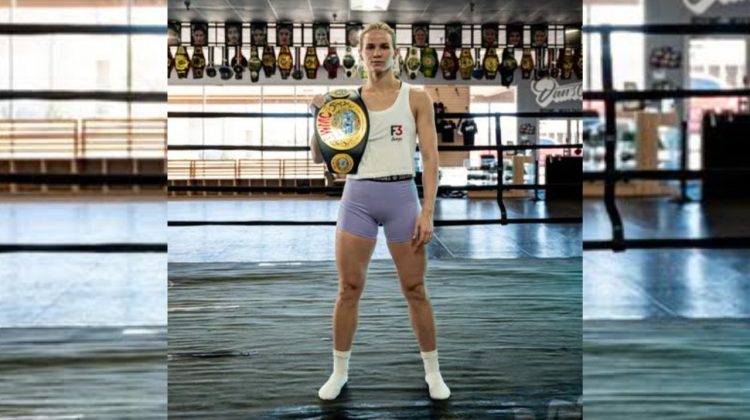
By Jasmine Garcia
The bright lights, cheering crowds, and the championship belts are the moments most people see when it comes to Muay Thai.
What they don’t see is the early morning runs in Arizona’s summer heat, multiple daily training sessions, strict diet plans and the mental grind that begins long before the match.
For professional Muay Thai fighter and boxer Tierra Brandt, those unseen moments have been the foundation of a career that has taken her from a young girl training alongside her parents to becoming one of the most accomplished Muay Thai athletes in the United States.
Brandt is a four-time Muay Thai National Champion, four-time IFMA (International Federation of Muay Thai Associations) gold medalist, WMC World Champion and Team USA representative who competed in the 2024 Olympic Muay Thai Showcase in Paris.
While Brandt’s accomplishments speak for themselves, her journey began years before the medals, world titles and championships. She grew up in a family of fighters, Brandt was introduced to Muay Thai at a young age. Both of her parents were fighters, with her father competing professionally before retiring and her mother beginning her own fighting career when Brandt was still a toddler.

Watching her parents train inspired Brandt to step into the gym herself. She began training around 8 or 9 years old with the goal of competing and made her amateur debut at 11. Although at first her father didn’t want his daughter stepping into the ring, Brandt won her first fight by knockout, a moment that convinced him she had the potential to succeed in the sport.
While winning her first fight earned her father’s confidence, growing up with him as both a dad and a coach brought its own challenges. Between the ages of 12 and 15, Brandt struggled to separate the two roles. Like many teenagers, she often took her father’s criticism personally, admitting she would sometimes cry when he pushed her to improve.
“Anytime he would criticize me, I would cry and have fits,” Brandt said. “It’s just part of being a kid. Some people have their coach yelling at them, but I had my coach and my dad yelling at me, so mentally I think it was a little tricky to figure out.”
As she got older, Brandt’s perspective began to change. Instead of viewing her father’s criticism as personal, she recognized it as an investment in her growth as both an athlete and a person.
“After 15 or 16 years old, I flipped that switch to realize he was just trying to help me, not criticize me,” Brandt said. “After that, we started taking over the world.”
After Brandt embraced her father’s coaching, she developed the mindset that would carry her through years of training, sacrifices and success. As she continued competing, she realized that the biggest victories were earned through the work she put in long before stepping into the ring.
While everyone sees the final results inside the ring, Brandt says they rarely see everything that happens behind the scenes.
“People only see the lights and the ring when the moment does come, but the process, everything leading up to that, no one really sees,” Brandt said.
For Brandt, that process has become part of her everyday life. A typical training camp lasts between six to eight weeks, with her often training two or even three times a day. Between strength and conditioning sessions, technical training, recovery and nutrition, nearly every part of her day revolves around preparing for the fight.
“I wake up immediately to go run or go to my first training session, come home, shower, go to the next training session, come home, eat, take a nap, then go back to training,” Brandt said.
Beyond the physical training, Brandt says much of the sport comes down to mental toughness. Whether it’s getting through long training sessions or running miles in Arizona’s 110-degree heat, she believes the biggest challenge is pushing through when most people would quit.
“Can you willingly want to run four to six miles in the Arizona heat at 110 degrees? Not everyone wants to do that,” Brandt said. “It’s more of a mental push.”
That same mindset has also meant making sacrifices. Growing up, Brandt spent much of her childhood in the gym instead of going to birthday parties, school dances or hanging out with friends. Looking back, she doesn’t see those moments as sacrifices anymore.
“I don’t consider it much of a sacrifice anymore,” Brandt said. “It’s what I choose to do. It’s not a job anymore. It’s a passion.”
Just like many athletes, Brandt has also faced setbacks. Just before turning professional at 18, she tore her ACL during the COVID-19 pandemic, delaying the next chapter of her career. She also had to overcome the challenges of competing in a sport where female fighters often have fewer opportunities than men.
Even after becoming a world champion and representing Team USA, one thing hasn’t changed. “The nerves never go away,” Brandt said. “You just kind of learn how to manage them.”

When Brandt steps into the ring, the nerves don’t disappear, but her focus takes over. The crowd fades into the background as she locks in on the voices of her parents, coaches and teammates, the people who have supported her every step of the way.
Looking back, Brandt says none of her success would have been possible without the people who stood beside her from the beginning.
“It takes a village to get where we are now,” Brandt said.
While fans remember the championships, world titles and moments under the bright lights, Brandt knows those accomplishments are only part of the story. But behind every victory are years of discipline, sacrifice and hard work that most people never get to see.