 Sports360AZ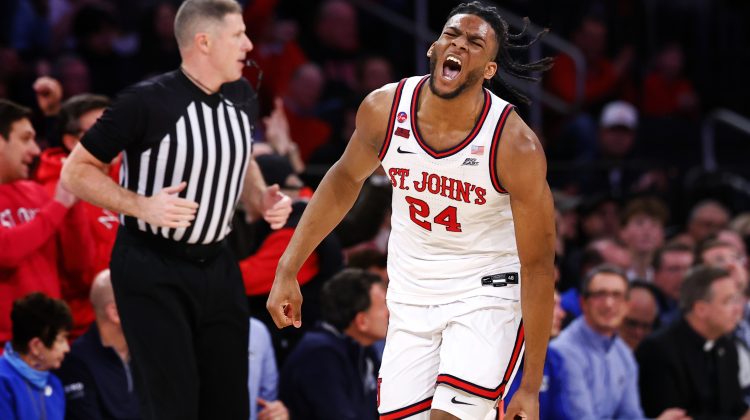
By Gerald Bourguet
The 2026 NBA Draft is just hours away, and while the Phoenix Suns currently only have one pick slated for Night 2, recent history suggests there’s a strong possibility they move up from No. 47 in the pecking order.
Since general manager Brian Gregory first joined the Suns front office two years ago, Phoenix has been more active in moving up in the second round than any other team in the league.
In 2024, the Suns traded down six spots in the first round to take Ryan Dunn — who figured be available at No. 28 anyway — and picked up three extra second-round picks in the process. Then they traded No. 56 — one of the picks they had just acquired — along with another future second-rounder to move up to No. 40, where they took Oso Ighodaro.
Last year, the Suns entered draft week with Kevin Durant, the No. 29 pick and the No. 52 pick. They selected Khaman Maluach with the No. 10 pick they got from trading KD to Houston, but they also got five extra second-rounders out of that deal.
After trading No. 29 and a 2029 first-rounder for Mark Williams, they packaged two of their newly acquired second-rounders to move up to No. 36. From there, Phoenix flipped No. 36 and two more of those new second-rounders to move up to No. 31, where they got their guy in Rasheer Fleming. They also packaged their picks at 52 and 59 picks to move up to No. 41, where they took Koby Brea.
In short, the Suns don’t mind leveraging future second-rounders to get help now, routinely finding new ways to kick the can further down the road. That approach can be dangerous with first-round picks, but other teams treat second-rounders as expendable fodder, and since the Suns have a good track record of finding talent in the second round lately, it’s a commendable approach to squeeze every last ounce out of the team-building process.
In terms of assets they could use to move up, the Suns still have two future first-round picks that become trade-eligible on draft night, as well as two future second-rounders they can trade (their own in 2029 and 2033).
Phoenix should hold those first-round picks close, especially in the wake of the NBA’s radical draft lottery reforms, but those future second-rounders could very easily be in play, and because the Suns are no longer a second apron team, they can send out cash in trades again, giving them another effective tool that teams have historically used to “buy” their way further up in the draft.
Basically, it’s not out of the realm of possibility for Phoenix to move up from No. 47. In fact, given Gregory’s recent history, it’d almost be surprising if they didn’t, and there are a number of teams with multiple picks who would make sense as potential trade-up targets. Over at Suns After Dark, we rattled through 20 different trade-up scenarios to paint a picture of what that might look like.
All of this means there’s a wide range of prospects to evaluate when trying to figure out the best draft fits for Phoenix. We’ve already covered some first-round candidates that might be worth trading up for, so leading up to the draft, we’re going to take a deeper look at a few names that might be called in the late first round/early second round, and why they might be good fits for this Suns squad.
Over the last two weeks, we examined Trevon Brazile from Arkansas and Cincinnati’s Baba Miller. This week, we’re closing out our series of NBA Draft profiles with Zuby Ejiofor from St. John’s.
A look at Zuby Ejiofor’s game
There’s a good chance Zuby Ejiofor will be off the board long before the Suns’ pick at No. 47, possibly even in the first round. The Athletic’s Sam Vecenie has him going 25th in his latest mock draft after slating him at 32 and 35 in his prior mocks, while ESPN has Ejiofor at No. 32 after tabbing him 32nd and 29th in their last two mocks. On this last wave of mocks before draft night, Ejiofor is as high as No. 20 on No Ceilings and no lower than No. 33 on Yahoo! Sports.
But considering how much Mat Ishbia loves his Michigan State Spartans, hearing Ejiofor labeled by some draft experts as a “more athletic Draymond Green” should catch everyone’s attention in Phoenix…even if Ejiofor didn’t actually play for Sparty. So if Ejiofor falls on draft night, or if the Suns manage to trade up and have a shot at this 6-foot-9 forward, they should strongly consider bringing him to the Valley.
Last season as a senior at St. John’s, Ejiofor averaged a well-rounded 16.3 points, 7.3 rebounds, 3.5 assists, 2.1 blocks and 1.2 steals in his 30 minutes per game. After he posted a 7-foot-2 wingspan, 8-foot-11 standing reach and 34-inch jump at the draft combine, he may have climbed some teams’ draft boards in the second (or even first) round, with The Athletic’s John Hollinger noting how he “likely helped his ‘just a basketball player’ label.”
As one draft evaluator put it, Zuby Ejiofor is the best defender in this class…until the shot goes up. His subpar defensive rebounding numbers and shorter height could hold him back from being viewed as a legitimate stretch-5 option, but on a Suns team that will be banking on the size and length of Khaman Maluach, Oso Ighodaro and Rasheer Fleming for the foreseeable future, maybe that’s not as vital?
Watching him play, you can’t help but notice Ejiofor’s constant activity, his incredible IQ as a positional defender who always seems to be in the right spot, and how he just makes opponents feel his presence on the defensive end. His nonstop energy comes with an accompanying hum as he buzzes around any offensive player that enters his orbit and hurries them into a faster pace that leads to mistakes.
Before we run the risk of sounding like we’re chalking up his defensive prowess to “vibes” and “aura,” we’ll let the tape speak for itself:
From mean chase-down blocks at the rim to the physicality he plays with in the paint, Ejiofor checks a lot of boxes for any team that wants energetic, smash-mouth defenders who love to bang bodies and swarm opponents in the post, can retreat back out to contest shooters, and deflate layup attempts off the backboard every chance they get.
Ejiofor can more than hold his own as a point-of-attack defender, sitting down in stance to not only contain smaller ball-handlers, but use his strength and mobility to press up on them and pressure the ball — a big reason he got so many blocks playing one-on-one defense on the perimeter. Off the ball, Ejiofor communicates well, closes out effectively and always seems to make the right rotation.
According to CBB Shot Charts, St. John’s held opponents to 53.9 percent shooting at the rim with Ejiofor on the floor, but that number increased to 55.9 percent when he was off the court. Opponents also improved from 30.2 percent to 41 percent shooting on long midrange attempts whenever Ejiofor sat.
St. John’s commitment to having everyone crash the glass likely explains some of Ejiofor’s underwhelming defensive rebounding numbers, but his ability to switch onto the perimeter and stonewall players in the post should not be overlooked. If he can become a fully switchable defender at the next level, he’ll provide plenty of value for a late first-round or early second-round pick.
It’s the offensive end where Ejiofor will need to carve out a more specific role, particularly when it comes to figuring out how he’ll score in the pros. In college, he shot 53.6 percent overall, including 58 percent on 2-pointers and 63.8 percent at the rim. He got by as a “jack of all trades” kind of player, but it’s hard to tell which elements of his game he’ll be able to bank on in the NBA, especially with the size of a tweener who isn’t big or bouncy enough to be a consistent rim-running target.
Ejiofor’s clever post-up game and willingness to back people down will be less practical as a role player in the NBA, where he won’t have the same physical advantages anymore. He’s got a nifty little hook shot, but it wasn’t super efficient, as Ejiofor shot 21-for-51 (41.2 percent) on hook shots, per CBB Shot Charts.
He’s got a decent shooting stroke, but it’s probably not something he can bank on yet. Ejiofor only took three step-back jump shots and seven pull-up jumpers all season. Of his 110 jump shot attempts, he shot just 36.4 percent.
If he can flesh out his dribble-drive game, continue dunking on people, and fine-tune his hook shot and his smooth spin move until they’re a more reliable part of his arsenal, he may be able to get by without having an elite NBA skill on the offensive end.
However, he’ll really need to turn his 3-point shot into a more reliable weapon. Ejiofor only shot 30.4 percent from deep on 1.6 attempts per game last year, and he only attempted 112 total 3s in 131 games over his four years in college. His stroke doesn’t look bad from deep or even from the midrange, but serviceable jumpers in college can quickly become liabilities at the next level if they don’t continue to progress.
Fortunately, Ejiofor is also a sharp ball-handler and cunning passer in the short roll, in the post and on the perimeter. He knows how to facilitate crafty dump-offs when he feels help defenders rotate over on his drives, he can operate out of doubles when they arrive in the post, and he’s a gifted high-low passer.
Ejiofor can put the ball on the floor, and he’s a clever, split-second decision-maker, which bodes well for his ability to play in dual-big lineups, where spacing will be key. Being able to facilitate with great timing on his reads like these could go a long way in carving out more of an offensive role at the next level:
Zuby Ejiofor also cleans up on the offensive glass, which would make him a seamless fit for a Suns team that ranked fourth in offensive rebounds and sixth in second chance points last season under Jordan Ott. As No Ceilings’ Maxwell Baumbach pointed out, Ejiofor’s offensive rebounding percentage over his four years in college is right around what elite offensive rebounders like Donovan Clingan, Jalen Duren and Mark Williams posted in their final collegiate seasons.
A whopping 92 of Ejiofor’s 373 shot attempts last season came off second chance looks, and he shot 62 percent on those attempts. He was also more than capable of finding the open man in the chaos that comes from offensive rebounding opportunities too, spraying it back out for the type of backbreaking 3s that demoralize a defense.
In other words, Ejiofor is a FORCE on the offensive glass, and he does it without the size you’d traditionally see from players posting that type of offensive rebounding percentage.
For those still concerned about his offensive repertoire, it’s worth a reminder how well-rounded Zuby Ejiofor is as a player, since he joined Draymond Green and Yaxel Lendeborg (my favorite target from our first-round prospects) as the only collegiate players to record a true shooting percentage of at least 55 percent, an offensive rebounding percentage of at least 10, an assist percentage of at least 20, an assist-to-turnover ratio of at least 1.5, a block percentage of at least 4, a steal percentage of at least 2, and a box plus/minus of at least 10 (min. 15 games).
Yeah, yeah, yeah, selective parameters, pull up the infamous Thaddeus Young graphic, whatever, whatever: This dude had a positive impact on the game in pretty much every facet!
Simply put, Ejiofor just plays like a winner who always wants to win. He led St. John’s to a second straight Big East Tournament championship, earning Most Outstanding Player in the process. He has not one, but two game-winners over the last two seasons coming off offensive boards leading to put-backs where he just wanted it more than his opponent, which isn’t a lot, but it’s weird that it’s happened twice.
And by “weird,” we mean “makes perfect sense, because this guy knows how to impact the game as the place where burly strength, basketball IQ and unrelenting motor meet.”
No Ceilings’ Albert Ghim put it best: Ejiofor plays with “the mentality of a bully” and “backs down to absolutely no one.” That sure sounds like someone who’d fit in on this Suns team, and being able to learn from Dillon Brooks would be an added bonus.
For more of Gerald Bourguet’s Suns work, check back with Sports360AZ on a weekly basis, subscribe to his Patreon articles and podcast at Suns After Dark, or follow him on Twitter.