
There are 50 days until the Pac-12 returns as an officially recognized conference with nine schools for basketball, eight for football and one lingering, inescapable question: Will it expand again?
Conference executives have acknowledged that an additional all-sports member would create the ideal size.
But when the issue surfaced recently on two campuses, Washington State and Colorado State, responses from key voices hinted that further expansion is unlikely.
That the value proposition is unwavering.
That the standards are lofty and the options limited.
That remaining lean and nimble is advantageous within a roiling landscape.
“We are building a new brand, which is both unique and very powerful,” Washington State president Elizabeth Cantwell said last month during a news conference to introduce Jon Haarlow as the permanent athletic director.
“Any additional schools would have to be ready for that brand. We operate really tightly … You don’t see that really anywhere else. It’s a huge value for us at the moment, and we wouldn’t want to mess that up.”
The desire to expand again is rooted in scheduling, particularly on the football side: With nine schools, each team could play eight games in round-robin fashion and have four spots available for non-conference matchups.
But with eight schools in 2026, each team will play a seven-game round-robin schedule to determine the order-of-finish and a second game against one of the other teams that won’t count in the standings.
The home-and-home approach is wholly unprecedented and slightly suboptimal. But the downside risk isn’t nearly as great as the alternative: Adding a school that lowers the competitive bar and reduces the revenue shares for the other members.
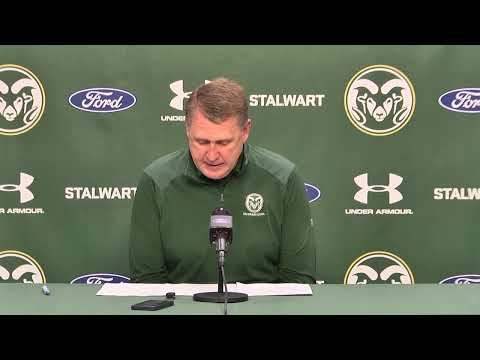
“What we don’t want to do is arbitrarily add schools to get to a specific number or to build, whether it’s specifically in the West or whether it’s a cross-country focus — we’re not doing that,” Colorado State athletic director John Weber told reporters last month.
“We’re doing it with institutions that can add value back to the league, because in this rev-share era, every single dollar counts.”
There is only one expansion scenario, according to industry analysts, that potentially could add material financial value to the Pac-12: a full-scale assimilation of the American conference for Memphis, Tulane and South Florida. But that trio declined the Pac-12’s overtures in September 2024 and seems unlikely to reverse course.
Otherwise, there are no viable options financially for all-sports members.
Sure, UNLV fits geographically, and the conference would benefit from planting its flag in Las Vegas. But how much would the Rebels increase the Pac-12’s collective media value?
“Not one dime,” said an industry source with expertise in media rights.
That bar might be higher today than it was even a few months ago, much less during the Pac-12’s expansion wave in the fall of 2024, due to a three-letter word uttered by every media executive in the country: N-F-L.
The most valuable TV franchise in the country is attempting to renegotiate its contracts with Disney, Comcast, Paramount and Fox.
Until there’s clarity — the NFL is reportedly seeking an increase of roughly $5 billion annually — the networks are pinching every last penny.
Even media companies that aren’t involved are preserving cash in case unexpected opportunities surface as a result of the negotiations.
In this environment, the notion that any Pac-12 expansion candidate would prompt one of its media partners (CBS, The CW and USA Network) to offer enough revenue to satisfy current members approaches laughable.
“If there is a potential partner out there to expand the conference, it has to be one that makes sense financially, that’s going to bring additional revenue to the league,” Haarlow said while seated alongside Cantwell.
“Otherwise, if we’re just adding partners to add partners, it diminishes our returns.”
Those returns are designed with one thing in mind: to construct rosters that maximize opportunities for the NCAA Tournament, which is expanding to 76 teams for next season, and the College Football Playoff, which could double in size (to 24 teams) later in the decade.
For both events, access is tied to the metrics used by the respective selection committee — metrics that lean into schedule strength and quality wins.
Adding low performers would undercut the Pac-12 with both March Madness and the CFP.
At the conference meetings last month, Weber noted during his Q&A with the media, “One of the common refrains we talked about is that our jobs are to make sure our best teams have a chance to compete on the national stage and have an opportunity to get into the NCAA Tournament and an opportunity to get into the CFP.
“We want to do that with quality opponents. We want to do that with quality non-conference opponents.
“We want to do this in a fashion where we’re doing everything we can to advance our teams. It’s incredibly important right now. It’s incredibly important for the Pac-12 to maintain access to championships.”
Because this isn’t about the “right now.”
It’s about using the present to remain tethered to the future.
Like the American and the Mountain West, the Pac-12 is viewed by member schools as a temporary home, a transport vessel to whatever comes next for college sports — whether that’s a super league or another round of expansion by the Big Ten, SEC, Big 12 and ACC.
To gain admittance, schools currently on the outside must elevate their brands.
That task, they believe, is best achieved by appearances in March Madness and the CFP.
And those appearances, in turn, hinge on cash for roster construction and quality opponents for the selection process.
“There’s a lot of significant movement going on across all the NCAA right now,” Weber said. “And we’re doing our part to advance the mission of all our institutions.”
Anything that could hinder the schools in their pursuit, including a risky expansion move, is viewed with deep skepticism.
Scheduling is important.
The future is paramount.
*** Send suggestions, comments and tips (confidentiality guaranteed) to wilnerhotline@
*** Follow me on the social media platform X: @WilnerHotline

Related posts:
 Pac-12 preview: Unbeaten teams facing threats, data on the hot start and WSU’s lack of respect
 Wilner Hotline : Need-to-knows for Week Five – The wild Stanford-Oregon history, Pac-12 Networks appearance count, the hot seat in Boulder and more
Pac-12 Preview: Heisman Trophy outlooks, FOX airtime, another interim, AP rankings update and more
Wilner Hotline : Need-to-knows for Week Five – The wild Stanford-Oregon history, Pac-12 Networks appearance count, the hot seat in Boulder and more
Pac-12 Preview: Heisman Trophy outlooks, FOX airtime, another interim, AP rankings update and more
 Jon Wilner previews Big 12 Title Game, Cam Skattebo Heisman talk
Jon Wilner

Jon Wilner has been covering college sports for decades and is an AP top-25 football and basketball voter as well as a Heisman Trophy voter. He was named Beat Writer of the Year in 2013 by the Football Writers Association of America for his coverage of the Pac-12, won first place for feature writing in 2016 in the Associated Press Sports Editors writing contest and is a five-time APSE honoree.