
 Jon Wilner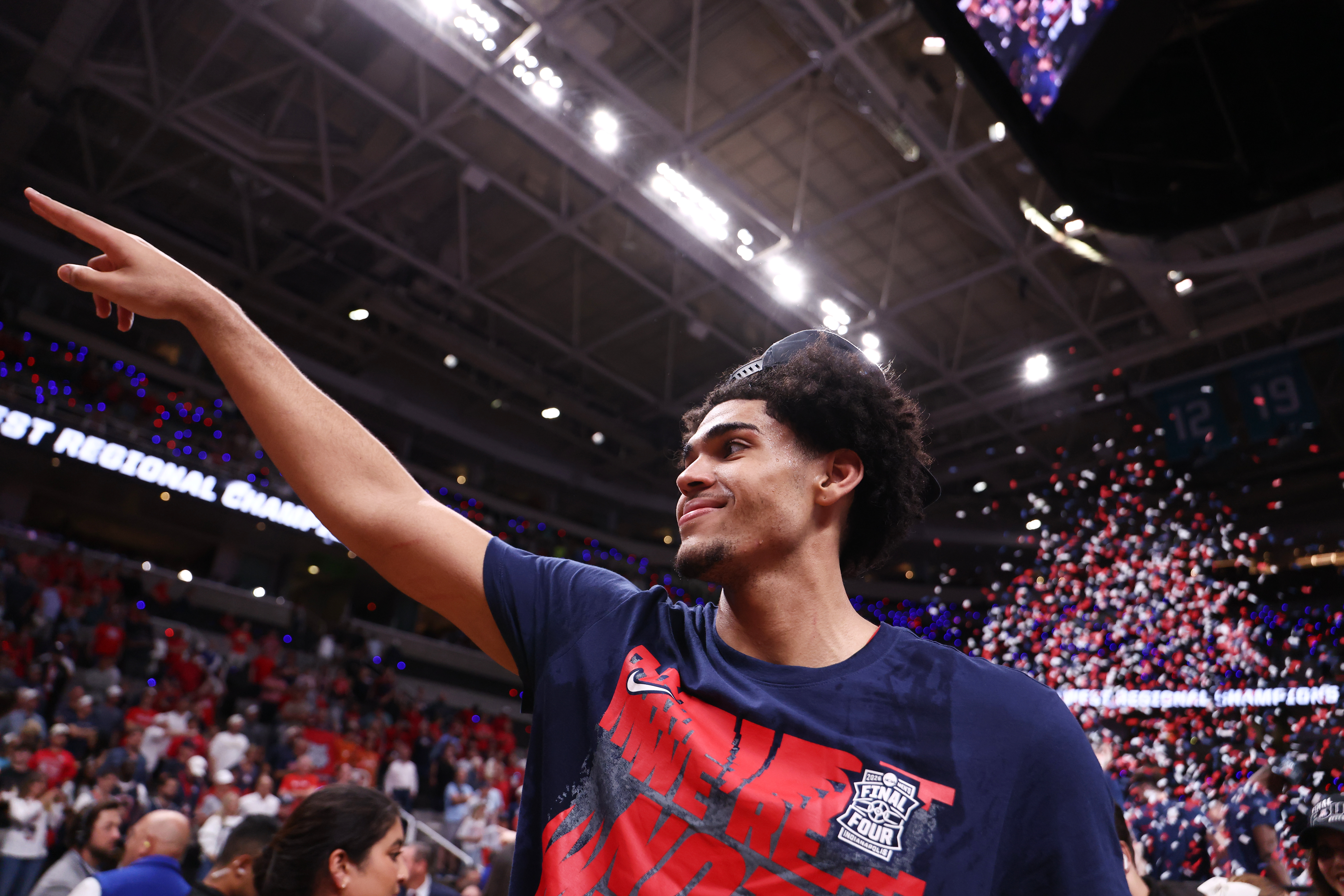
But our focus isn’t the sports’ biggest stage. It’s the worrisome backdrop.
Next month, college basketball executives will determine whether to expand March Madness to 76 teams next season and how the eight additional teams would be incorporated into the brackets.
The cleanest move? Turn what is now the First Four into a 24-team opening round, with 12 games Tuesday and Wednesday before the main event begins Thursday.
But within that adjustment is a potential contentious decision: The type of teams assigned to the opening round.
Would they be automatic qualifiers from one-bid leagues that usually receive No. 15 and No. 16 seeds?
Or would they be at-large teams from the power conferences that finish in the middle of the standings and are typically seeded 10th and 11th?
One option under consideration is to split the difference: 12 champions from smaller conferences would play each other, as would the last 12 at-large teams voted in the field.
Many longtime observers believe forcing the lowest seeds to cannibalize themselves in the opening round would strip the main event (the round of 64) of its charm and that the mediocre teams from the heavyweight leagues should fill the 12 opening round matchups.
Big Ten commissioner Tony Petitti will have significant influence on the discussion, and the success of his conference this month — it placed four teams in the Elite Eight — could empower Petitti to push for a format that favors the richest leagues at the expense of the mid- and low-majors.
In fact, Petitti suggested last fall that the NCAA selection committee use the 24 lowest-seeded teams as the opening round participants.
“We’re biased,” he told reporters. “We think our teams will be seeded higher as the field goes in.”
Pitting the 24 lowest-seeded teams against each other before the main event begins would undercut the potential for Cinderellas, which are already in jeopardy because of NIL and the transfer portal. It seems antithetical to everything that makes the opening weekend the greatest four days in American sports
But the possibility of that format, or something similar, cannot be ruled out.
Petitti could not have asked for better timing with his conference dominating the tournament just as the expansion issue heats up. Meanwhile, the little guys were eliminated early, with a paucity of upsets and no mid-majors advancing to the Sweet 16.
A decision on expansion must be made in April. Unfortunately, the results of the past 12 days have merely added leverage to the leagues that already have all the advantages.
To the winners and losers from the Elite Eight …
Loser: Duke (I). The top overall seed was eliminated Sunday afternoon by Connecticut in fashion so stunning that it will ratchet up the pressure on coach Jon Scheyer next season. The Blue Devils led by 19 points in the first half and 15 at halftime but committed a turnover against UConn’s pressure in the final seconds that led to a game-winning, 35-footer by Braylon Mullins. We watched it unfold in real time and multiple times on replay and still don’t believe it.
Winner: Danny Hurley. UConn’s coach is two wins away from his third national title in four years and, more impressively, is 10-0 against the point spread in the Sweet 16, Elite Eight and Final Four. This was his most unlikely win — partly because it required a 35-footer with 0.4 seconds remaining and partly because the Huskies missed 18 of their first 19 3-point attempts and somehow were close enough to complete a miracle.
Loser: Duke (II). No. 1 seeds were 134-0 in the NCAA Tournament when holding a halftime lead of 15 points or more … and then came Duke. But that’s not all, folks. This was the second meltdown by the Blue Devils in 51 weeks: If you’ll recall, they squandered a six-point lead with 1:14 remaining against Houston in the 2025 Final Four. In both instances, they appeared clueless against full-court pressure.
Winner: right side of the bracket. This isn’t meant to denigrate the UConn-Illinois matchup, but Arizona-Michigan stands as the marquee game on semifinal Saturday. The No. 1 seeds have a combined record of 71-5 and dominated their regions. The victor should be the clear favorite in the championship game.
Loser: SEC. One year after the conference put two teams in the Final Four and produced the national champion (Florida), the SEC will watch the semifinals from home. It placed 10 teams in the field, more than the Big Ten, Big 12 or ACC, but only advanced one to the Elite Eight (Tennessee). Also, the SEC was 0-5 head-to-head against the Big Ten — not that we’re keeping track.
Winner: Alex Karaban. The UConn senior forward is two wins away from his third NCAA championship — rarefied air indeed for players who were not part of the UCLA dynasty.
Loser: parity. The absence of mid-major teams from the Sweet 16 is just one piece of evidence that the tournament dynamics have shifted hard in favor of the richest schools. Here’s another: This is the first time since tournament expansion (1985) that three Final Four teams won their four games by double digits, according to the Associated Press. The only semifinalist that didn’t blast through its region was UConn.
Winner: Arizona. One of the most consistently successful programs in the country is back in the Final Four for the first time in a quarter century after dismantling Arkansas and Purdue in the West regionals. That giant step not only builds on what was a dominant regular season; it also could convince coach Tommy Lloyd to remain in Tucson and rebuff overtures from North Carolina.
Loser: The ACC. A feeble tournament began with two teams getting eliminated in the First Four (NC State and SMU), included a ghastly loss (North Carolina to VCU) and ended with the conference’s marquee program (Duke) producing a meltdown for the ages. But take heart, Tobacco Road: Football season is just five months away.
Winner: big men. A sport dominated for so long by 3-point shooting has undergone a strategic shift that will be on display next weekend in Indianapolis. Arizona’s frontline size is well documented — the Wildcats have a slew of players built like NFL tight ends. Michigan’s frontcourt is both skilled and enormous. UConn has a fabulous big man, Tarris Reed, and Illinois is loaded up front, as well.
Loser: pundits and metrics. The media narrative (guilty!) and closely-watched data suggested the teams awarded the No. 1 seeds would dominate the NCAAs just as they lorded over the regular season. Turns out, only two of the four, Arizona and Michigan, managed to win four games while Florida departed in the second round and Duke in the fourth. A good reminder for us all: The Madness usually wins.
Winner: the gods of March. As diehard UConn fans are well aware, the top-seeded Huskies were seconds away from the 1990 Final Four when Duke’s Christian Laettner hit a game-winning jumper to send the Blue Devils into the semifinals. Revenge is a dish … that tastes damn good, even after 36 years.
*** Send suggestions, comments and tips (confidentiality guaranteed) to wilnerhotline@
*** Follow me on the social media platform X: @WilnerHotline
Related posts:

(AP Photo/Julio Cortez)
Metcalfe – Pac-12 WBB postseason plunge: Grading the teams, look ahead to ’23
(AP Photo/Ralph Freso, File)
Hotline mailbag: Kliavkoff’s culpability, Pac-12 expansion options, the future for Cal and Stanford, valuing the Arizona schools and loads more College Football Playoff: Conferences solve their differences (for now) and agree on general framework for 2026 and beyond
 On media: The CW ratings for WSU and OSU, blackouts and streamers, Week 2 viewing options and more