
One of the most bizarre weeks in recent college sports history — it featured a showdown on Capitol Hill and a momentous hearing on sports gambling — began with a dash of sanity. The late Mike Leach’s name appeared on the College Football Hall of Fame ballot for induction in 2027.
The Hall adjusted its criteria to create a path for Leach, whose career winning percentage of .596 was one victory short of the threshold required (.600).
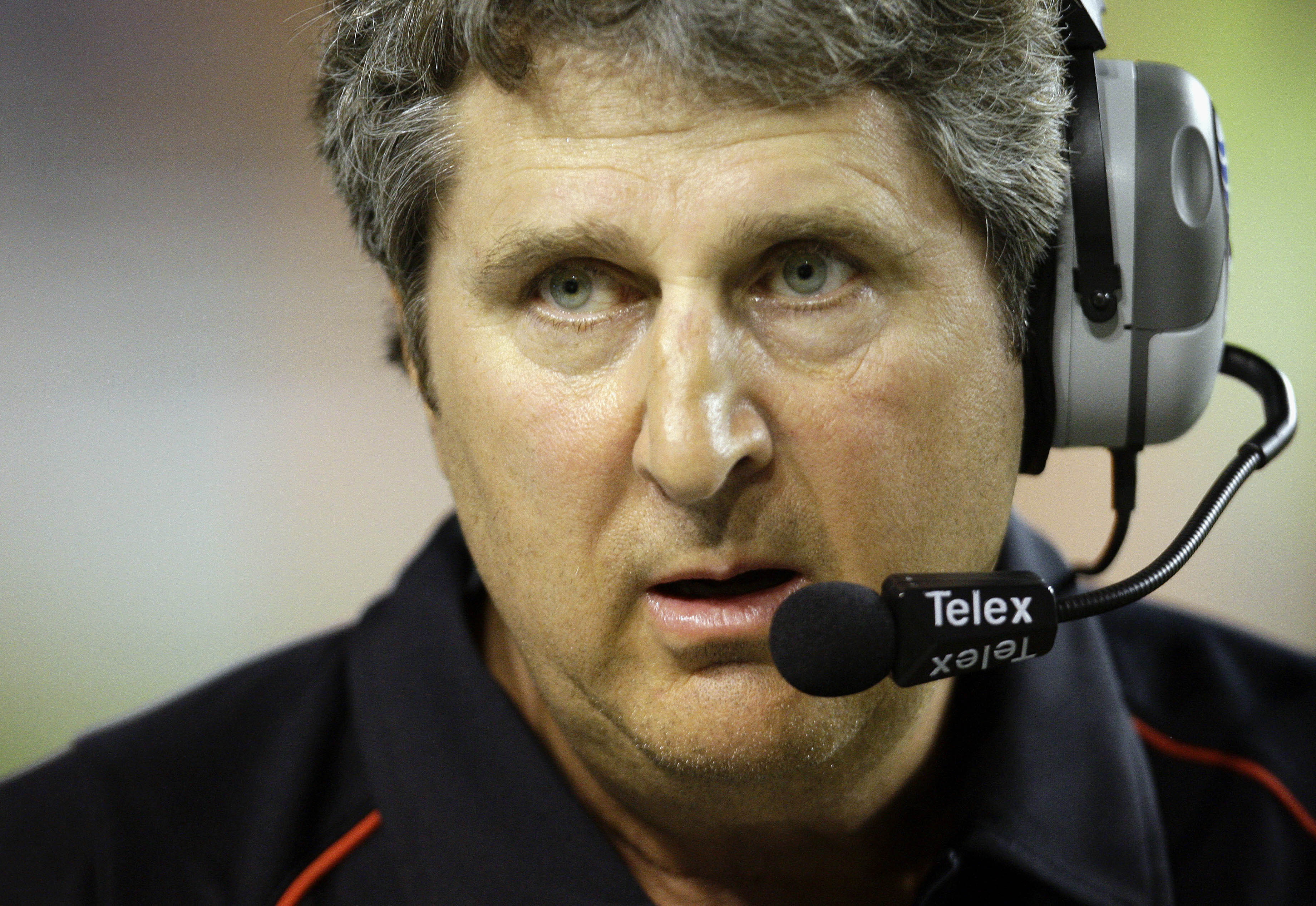 Given the immense impact of Leach’s Air Raid offense on all levels of the sport and his success at three challenging locations (Texas Tech, Washington State and Mississippi State), the Hall’s executive board lowered the bar to .595.
Leach should be inducted next winter. But who will join him in the HOF class of 2027?
In all, 80 former players and nine ex-coaches from major college football appeared on the ballot revealed June 1, along with 99 players and 39 coaches from lower NCAA divisions and the NAIA.
Before we begin naming names, a brief explanation is warranted.
The National Football Foundation, which operates the Hall of Fame, changed its induction criteria when Steve Hatchell was named president two decades ago. “It was made clear to me that it’s a Hall of Fame,” Hatchell once quipped, “not a Hall of Participation.”
But because there are hundreds of colleges and universities, the higher threshold has led to a massive logjam. There are a myriad I-can’t-believe-he’s-not-
The basic criteria:
— Players become eligible 10 years after their final season if they receive first-team All-American recognition by an NCAA-recognized organization. Also, they must have played within the last 50 years.
— Coaches become eligible three years after retirement or immediately following retirement if they are at least 70 years old. Candidates must have coached for at least 10 years and 100 games and have a cumulative winning percentage of .595 (i.e., the Mike Leach rule).
There are plenty of worthy candidates on the 2027 ballot, including quarterbacks Robert Griffin III (Baylor) and Ryan Leaf (Washington State), tailbacks Marshawn Lynch (Cal) and Greg Lewis (Washington), receivers Percy Harvin (Florida) and Tayvon Austin (West Virginia), linebackers Manti Te’o (Notre Dame) and A.J. Hawk (Ohio State), guard David DeCastro (Stanford) and kicker Sebastian Janikowski (Florida State).
And we could easily name another dozen.
But if the Hotline had a ballot, these five players would be locks:
Alabama OL Barrett Jones: The list of impactful offensive linemen from the greatest dynasty of the modern era features Cyrus Kouandjio, Cam Robinson and Jonah Williams, but it begins with Jones. The two-time first-team All-American and a three-time all-SEC honoree played every position up front in the first half of Nick Saban’s tenure in Tuscaloosa.
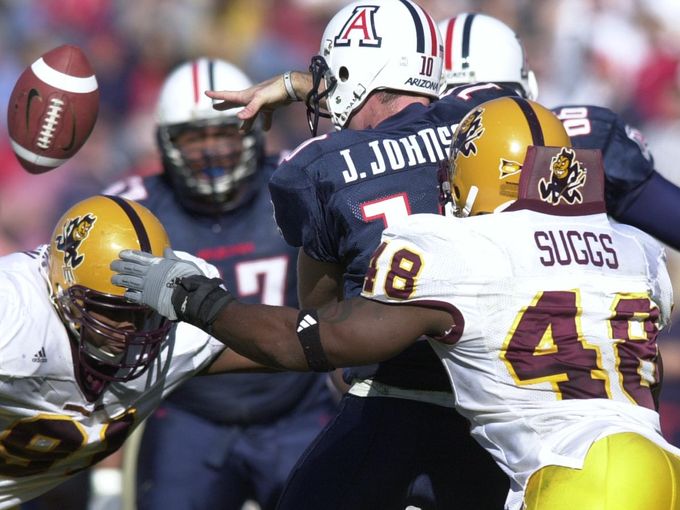
Arizona State DE Terrell Suggs: The Hotline did not realize until looking at the list of 2027 nominees that Suggs wasn’t already in the Hall. After all, he produced one of the most dominant years in the history of the sport in 2002, recording 31.5 tackles-for-loss and 24 sacks, an NCAA record that still stands. (Suggs won the Lombardi Award and the Nagurski Trophy.) Granted, sacks were not recorded as an official statistic until 2000, and the unofficial single-season record belongs to the late Derrick Thomas, who had 27 in 1988. Thomas was elected to the Hall posthumously. It’s past time that Suggs receive the same recognition.
Auburn QB Cam Newton: For our money, Newton’s performance at Auburn in 2010 belongs on the short list of the greatest seasons this century, alongside the likes of Reggie Bush, Vince Young and Christian McCaffrey. He carried the Tigers to the 2010 national title, won the Heisman Trophy and scored 20 running and 20 passing touchdowns. Oh, and this: Newton scored six touchdowns against South Carolina in the SEC championship.
Boise State QB Kellen Moore: The selection criteria does not favor single-season dominance at the expense of career excellence or vice versa. Moore’s tenure in Boise belongs in the latter category. Few players have been as good for as many seasons. Moore ended his career with the highest winning percentage (.943) in history and owns 50 major college victories, second only to Jalen Hurts (51). If winning more than all but one quarterback in history isn’t good enough, what is?
LSU CB Patrick Peterson: On the super-short list of players to win the Thorpe Award (best defensive back) and the Bednarik Award (best defensive player) in the same season. And not for nothing, Peterson was the SEC Player of the Year in 2010 on both defense and special teams, an unprecedented accomplishment. The personification of a lockdown cornerback who was a game-changer returning punts and kickoffs.
*** Send suggestions, comments and tips (confidentiality guaranteed) to wilnerhotline@
*** Follow me on the social media platform X: @WilnerHotline
Related posts:
 VIDEO – Scott Harkey joins Brad on Sun Devils new NIL Collective
FILE - Colorado coach Karl Dorrell (AP Photo/Jeff Chiu, File)
Karl Dorrell fired at Colorado as Pac-12 coaching tumult continues
(AP Photo/Josie Lepe)
As Pac-12 approaches new media deal, women’s basketball is now a big part of the conference’s TV offerings On media: The best and worst of 2024, from Herbstreit’s rants to the SEC on ABC, ‘GameDay’ in Berkeley, booth announcers and more
Jon Wilner

Jon Wilner has been covering college sports for decades and is an AP top-25 football and basketball voter as well as a Heisman Trophy voter. He was named Beat Writer of the Year in 2013 by the Football Writers Association of America for his coverage of the Pac-12, won first place for feature writing in 2016 in the Associated Press Sports Editors writing contest and is a five-time APSE honoree.