
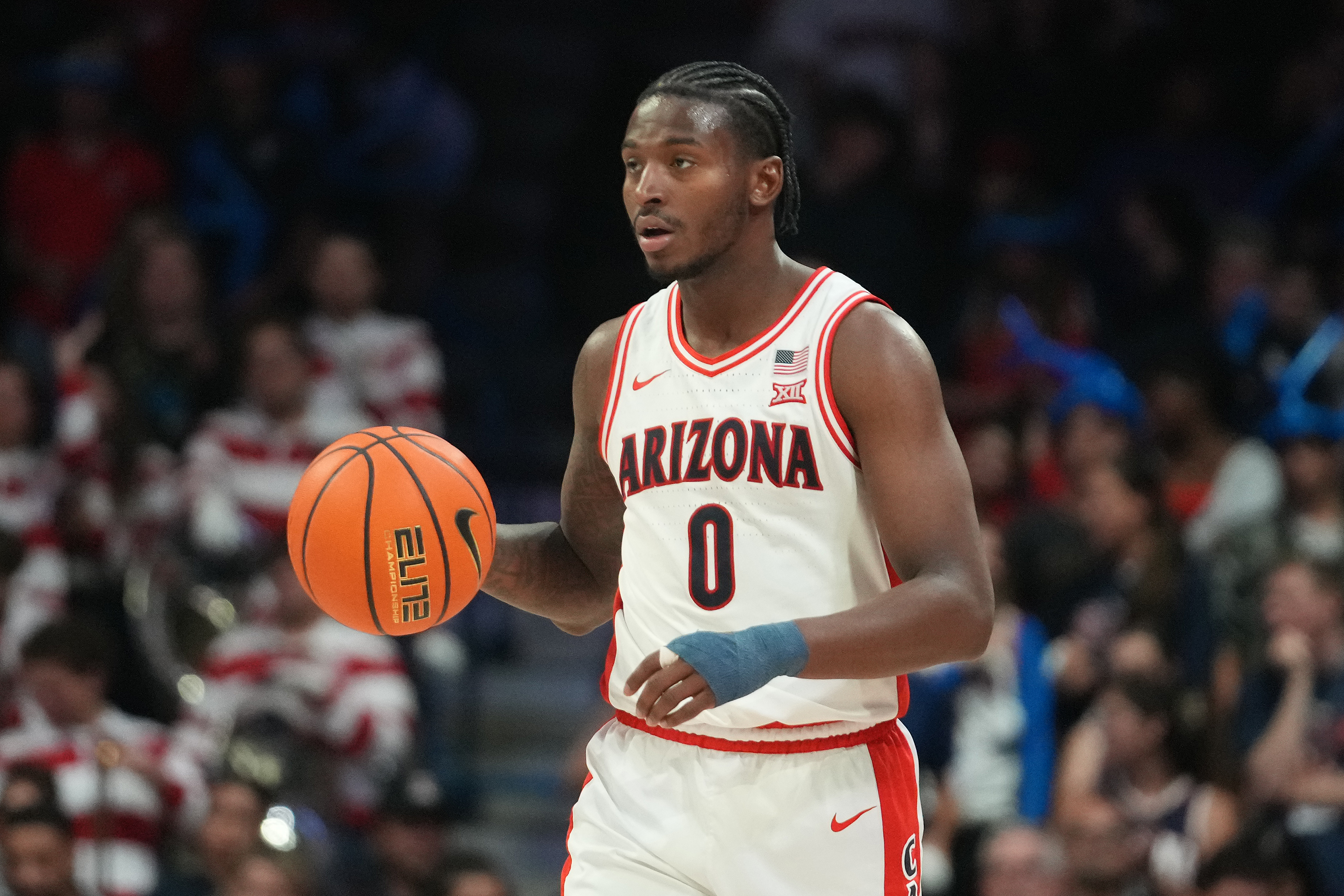
Let’s start with the bottom line: If Arizona loses before the Final Four, it’s a failure.
The Wildcats have won too much, been on top for too long and slayed too many elite opponents for the season to conclude before Indianapolis.
Before ending their 25-year Final Four drought.
Before exorcizing their demons from tournaments past.
Before fulfilling the potential on display since Nov. 3, when they toppled Florida, the defending national champions, and began an epic four-month run that included 12 wins over ranked opponents.
Quibble all you want with the NET rankings and the predictive metrics and the overall seeds for the NCAA Tournament — yes, the Wildcats have a case to be No. 1, ahead of Duke — but those are incidentals.
What matters most is the sweep of evidence: The Wildcats have been one of the three best teams in the country, along with Duke and Michigan, since the season began.
If they don’t win at least four games in the NCAAs, the 32 victories and Big 12 regular season and tournament titles and No. 1 rankings in the AP poll will be relegated to historical footnotes.
That might not be fair, but it’s the reality when you dominate as the Wildcats have for 135 days.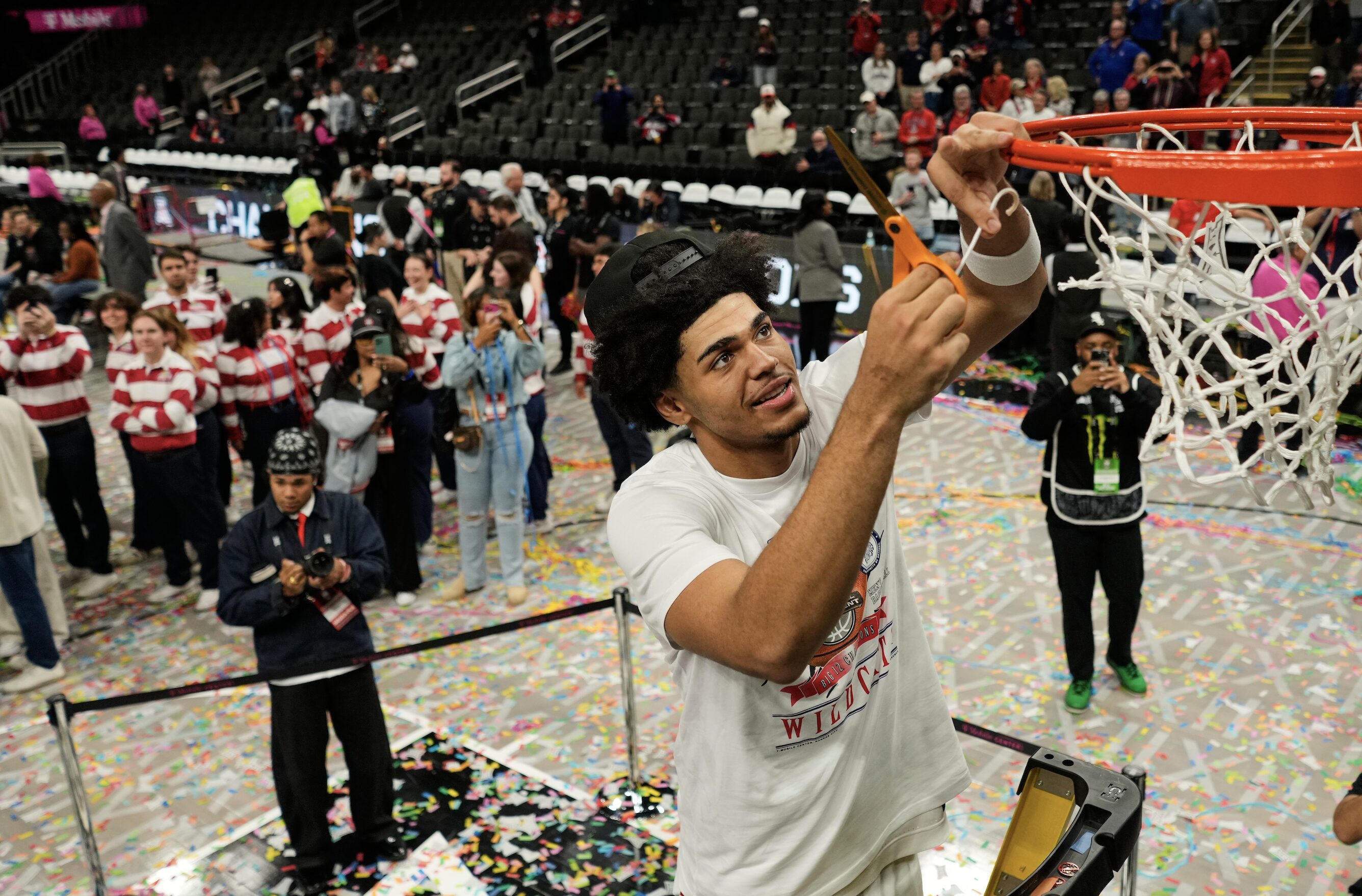
They cannot possibly lose in the first round to LIU.
A second-round exit at the hands of No. 8 Villanova or No. 9 Utah State would haunt coach Tommy Lloyd and the program for years to come.
What about a Sweet 16 loss to No. 4 Arkansas or No. 5 Wisconsin? Not an abject embarrassment, perhaps, but unacceptable in every sense.
Even a run that ended in the Elite Eight — and Arizona hasn’t been to the Elite Eight in 11 years — would be poorly received. Second-seeded Purdue and No. 3 Gonzaga are good teams with strong resumes, but neither has been in Arizona’s class this season.
For skeptics, any outcome in which the Wildcats fall short of the Final Four would add to the mountainous evidence that Arizona belongs on the short list of the NCAA Tournament’s greatest underachievers — a program that thrives during the routine of the regular season and wilts under the pressure of March.
After all, Arizona is the only school that has lost twice to No. 15 seeds (as the No. 2).
Yes, the first instance was 30-something years ago, to Santa Clara and Steve Nash. But recent history hasn’t been kind to the Wildcats, either.
Consider: Arizona’s loss in the Sweet 16 last year to top-seeded Duke broke a streak of six consecutive eliminations at the hands of opponents seeded at least four lines below the Wildcats.
The list:
2016: First-round loss to No. 11 Wichita State as the No. 6
2017: Sweet 16 loss to No. 11 Xavier as the No. 2
2018: First-round loss to No. 13 Buffalo as the No. 4
2019-21: Did not qualify/COVID
2022: Sweet 16 loss to No. 5 Houston as the No. 1
2023: First-round loss to No. 15 Princeton as the No. 2
2024: Sweet 16 loss to No. 6 Clemson as the No. 2
Given that carnage, it’s reasonable to wonder how Arizona will respond in the final minutes of a close game, with the underdog rolling and the crowd roaring.
For size and brute force, the Wildcats can match any opponent in any setting. (Lloyd smartly constructed the roster to endure the brutality of the Big 12.) But do they have the mental fortitude their predecessors lacked?
Because at some point along the road through the West, the Wildcats will encounter resistance.
It could come from Arkansas, which just won the SEC tournament and has a Hall of Fame coach (John Calipari) and the nation’s best point guard (Darius Acuff Jr.).
It could come from Gonzaga in the Elite Eight. Who knows Lloyd better than his former boss, Mark Few?
It could come from Purdue, the preseason No. 1 that just rolled through the Big Ten tournament.
Or it could come from an unexpected source — from a Cinderella or a sleeper — because that’s how March rolls.
When the time comes, when sphincters get tight, will the Wildcats cower? Or does this team, despite starting three freshmen, have the resiliency necessary to survive and advance?
It depends on point guard Jaden Bradley.
He is Arizona’s most important player by a factor of five. He has the experience and the moxie to offset the rookie starters. He’s the on-court leader and the tip of the spear defensively. And critically, Bradley will have the ball in his hands when it matters most.
March success, particularly in the regional rounds, is all about creating scoring opportunities in the final 10 seconds of the shot clock in the late stages of close games.
You’re down five with two minutes left and need to stay in striking range.
You’re ahead by a basket with 40 seconds remaining and need to make it a two-possession game.
Those are the sequences that define the NCAAs, that ensure survival or spark elimination.
Will Bradley break down the defense and create a lay-up for Koa Peat or an open 3-pointer for Brayden Burries? Will he take the shot himself and drain a 14-footer from the elbow?
Above all, will Bradley keep the Wildcats focused and confident if the flow of the game shifts against them and the pressure turns stifling?
With four more wins, a superb player will morph into Arizona royalty and 25 years of frustration will melt away.
But the ghosts of flameouts past are gathering, and the region is loaded with potholes.
The fate of this epic season is at stake.
*** Send suggestions, comments and tips (confidentiality guaranteed) to wilnerhotline@
*** Follow me on the social media platform X: @WilnerHotline

Related posts:

(AP Photo/Ralph Freso, File)
Hotline Mailbag – Options if the Pac-12 raids the Big 12, The Apple-12 Conference?
SEC Commissioner Greg Sankey (AP Photo/George Walker IV)
Realignment 101: Sankey focuses on “16” while ACC legal issues linger, but is Fox targeting unclaimed ground? Wilner Mailbag: Metrics for Pac-12 expansion candidates, the CFP’s future, USC’s QB matchups, ASU’s expenditures, Foster’s remarks and more
 Wilner’s Saturday Night Five – Arizona State sizzles, CW first-rate broadcasts, Oregon O-line struggles, more.
Jon Wilner

Jon Wilner has been covering college sports for decades and is an AP top-25 football and basketball voter as well as a Heisman Trophy voter. He was named Beat Writer of the Year in 2013 by the Football Writers Association of America for his coverage of the Pac-12, won first place for feature writing in 2016 in the Associated Press Sports Editors writing contest and is a five-time APSE honoree.